
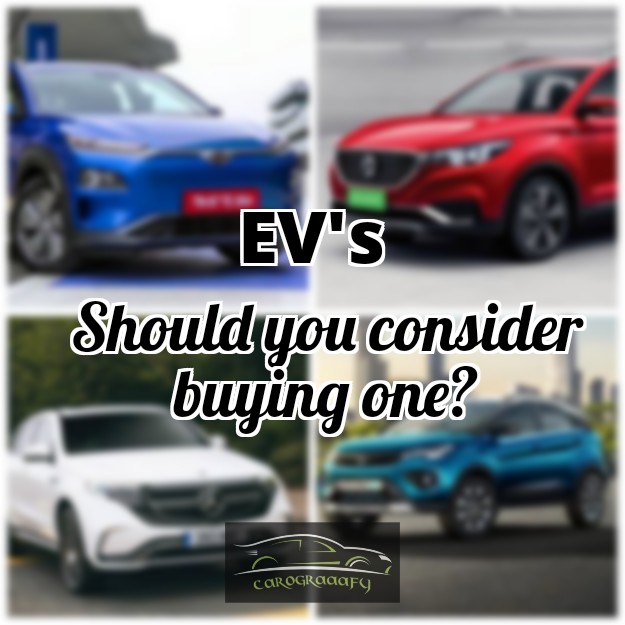
Electric vehicles or EV’s are the future of mobility, and have a huge role to play, when it comes to eco-friendly transportation.
What are EV’s?
In an Electric Vehicle (EV) the electric motor runs by utilising the electricity stored in its battery. Here the electric motor does everything an internal combustion engine in a gas-powered car does. The battery of the EV is charged from time to time.
How EV’s work?
EV’s produce their maximum torque output straight out of the bat. That means you have access to the entire torque output straight from standstill. It only starts decreasing as you progress towards the upper RPM range due to the phenomena of back EMF. EV’s only consist of one intermediate part between the wheels and the motor, the transmission. Hence, they produce a really high torque output and experience negligible output loss at the same time.
Smooth Driving Experience
EV’s don’t have a lot of moving parts inside the engine. In fact, they only have one moving part, which is the electric motor. The petrol engine has a myriad of rotating parts inside. In order to produce power, they have to constantly keep grinding and hitting against each other. The sound waves created from the contact between these parts is heard as the exhaust note and felt inside the car’s cabin as vibrations.
While nowadays, petrol engines release significantly lesser noise and vibrations compared to what they would a 7 or 8 years ago, they still exert noticeable levels of both. In an electric vehicle, the only moving part is the motor which spins and in turn rotates the wheels. The only sound that can be heard from this process is a very futuristic and almost silent whine. The same attribute also contributes to an absolutely vibration-free driving experience as well.
Points to be considered before buying an EV
Now that you had decided to buy an EV there are few things to be kept in mind before buying one
Budget
This is the most important point we Indian’s consider while buying a new car. EV’s are eco friendly but aren’t pocket friendly. An EV can cost you ₹ 5-6 lakhs more than their ICE(petrol/diesel) counterparts
Vehicle Specifications
EV’s come with range of power and battery pack options you will have to choose one based on your requirements.
Tax Benefits
Government has taken steps to encourage the use of electric vehicles by granting reductions on motor taxes. Likewise, by providing subsidies and other incentives on EVs the government is trying to promoting sustainability.
Battery
Battery pack is the heart of an EV. Battery is the most expensive part of an EV, replacing one can burn a hole in your pocket. So, always check the battery life before investing in an eco-friendly car. The longer the battery life, the lower the maintenance cost. Recently Hyundai recalled it’s Kona EV over faulty battery pack. Most of car manufacturers give 8-10 years of warranty on battery pack.
Driving Range
Driving range is one of the most crucial factors while buying an EV. Don’t rely on the manufacturer specified driving range figures. Instead, look for real-life reviews to get an idea about the driving range of the EV in real-world conditions. Typically, an electric car should deliver a driving range of over 100km, which is sufficient for daily drives. High-end electric cars even offer a driving range of over 400km.
Charging Infrastructure
Charging infrastructure is still in its initial stage in the country. You cannot find electric vehicle charging stations as frequently as fuel stations, and it is one of the biggest challenges for EV owners. Currently, major metro cities have adequate charging stations, but everywhere else, the situation is not the same. So, do account this fact before deciding to own an electric car in India.
Maintenance cost
Maintenance is one of the important aspects of owning an electric car. Without proper maintenance, the EV may not perform efficiently. Normally, electric vehicles are very easy to maintain, as there are less moving parts in an EV. But in case of a breakdown, the repair bills can cost dearly. Also, the spare parts are very expensive when compared to a conventional car. Also, there are only a handful of mechanics available for EVs, and you have to deal with the manufacturer for any service or repair works.
Usability
An electric car is not a practical vehicle, especially in a country like India. It all boils down to your requirements. How much distance do you drive in a day, and what is the driving range of the electric vehicle? It makes sense to own an EV if you reside in a metro city, and all you need is a car to commute to your office. For others, an electric car might not be a practical choice. So, do consider this point before deciding to own an EV.
Brand and Model
Currently, there are only a handful of electric cars in the Indian market. So, the choice should not be a difficult task. Hyundai Kona, Mahindra eVerito, Tata Nexon EV and MG ZS EV and Mercedes EQC. India retail eco-friendly vehicles in the country. The options are few, but they belong to different price brackets. So, depending on your budget and requirement, you can choose the right brand and model. Apart from the above-mentioned brands, several other automotive manufacturers are planning to launch electric vehicles in India.
Conclusion
There are many factors to take into account when choosing whether to purchase an EV. However, it doesn’t have to be an overwhelming decision. Consider your needs, the availability of charging stations near you, and do some research on the different models and makes of electric cars out there today. This will push you toward making the right decision for yourself and your family.
Please follow us on our social media pages on Facebook, Instagram and Twitter

Disclaimer- This blog is published by and reflects the personal views of the Carograaafy team, in their individual capacity.











 Carograaafy